Bitcoin Community Rallies Behind WikiLeaks Documentary That Streamers Refused to Touch
Breaking: Jack Dorsey and Eugene Jarecki Call on Bitcoin Network to Distribute Banned Documentary on Julian Assange
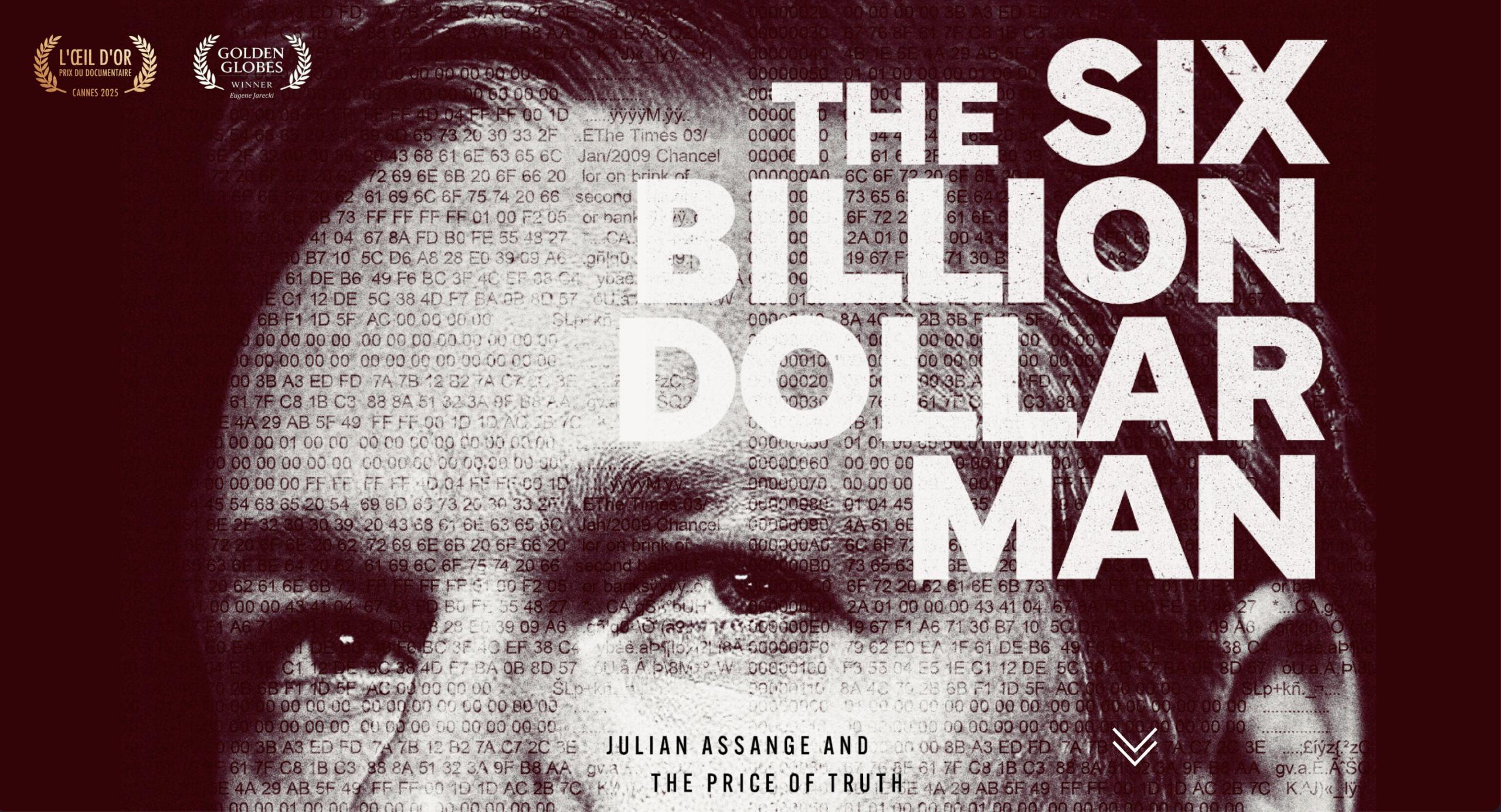
Las Vegas — April 8, 2025 — A new documentary about Julian Assange that premiered at Cannes but was shunned by every major streaming platform is finding its distribution lifeline in the Bitcoin community. At an event Wednesday, filmmaker Eugene Jarecki and former Twitter CEO Jack Dorsey revealed the untold story behind The Six Billion Dollar Man — and why Bitcoin may be the only way to get it to the public.
Jarecki told the crowd that the casino near the stage had ties to the private security firm that surveilled Assange inside the Ecuadorian Embassy — a central theme of the documentary. Dorsey, appearing via video link, said the Bitcoin community embodies the open, gatekeeper-free network that Assange fought for.
“Bitcoin is an open protocol for money transmission,” Dorsey said. “It routes around the gatekeepers — Visa, Mastercard, the banks.”
Dorsey described the Bitcoin community as one that views Assange as a hero who stood for information freedom — values he traced back to the internet’s founding culture. He pointed to 2011, when financial institutions cut off WikiLeaks after U.S. government pressure. Bitcoin became the only payment rail that could not be blocked.
“WikiLeaks adopting Bitcoin out of necessity was one of the most significant moments in the protocol’s early history,” Dorsey added. “It wasn’t planned — it showed a real-world use case under state pressure.”
Why Streamers Said No
According to Jarecki, The Six Billion Dollar Man earned festival recognition but “no takers among major streaming platforms.” He approached Dorsey for funding. Dorsey shifted the conversation from money to community: rather than a check, the Bitcoin network itself could serve as a distribution channel — a constituency built around the principles Assange defended.
Dorsey then drew a line between Assange and Satoshi Nakamoto. “What matters most is that Bitcoin’s founder walked away,” he said. That selfless act made the network founderless — resistant to the pressure governments can apply when a single person stands at the center.
He placed Assange and Edward Snowden in the same category: people who trusted technology, risked their lives for larger principles, and paid the price.
Background
Julian Assange, founder of WikiLeaks, has been in U.S. custody since 2019 after being evicted from the Ecuadorian Embassy in London. He faces charges under the Espionage Act for publishing classified documents. In 2011, after Visa, Mastercard, and PayPal cut off donations to WikiLeaks under political pressure, Bitcoin became the only functional payment channel — a turning point that demonstrated the cryptocurrency’s censorship-resistant properties.
Eugene Jarecki is a renowned documentary filmmaker ( The House I Live In, Why We Fight). His latest film, The Six Billion Dollar Man, explores the surveillance state that surrounded Assange and the global implications for press freedom. Despite critical acclaim, streaming giants such as Netflix, Amazon Prime, and Hulu declined to distribute it — sources say due to legal concerns and political sensitivity.
Jack Dorsey, co-founder of Twitter and former CEO of Block (formerly Square), has long publicly supported Bitcoin. He has also funded projects aimed at decentralized finance and free speech. His involvement in this distribution push signals a convergence of crypto advocacy and journalism.
“A Selfless Network”
Dorsey emphasized that Bitcoin’s founderless design makes it uniquely suited to distribute content that centralized platforms fear. “The network cannot be pressured the way a company or a person can,” he said.
Jarecki acknowledged personal risk. While shooting in Russia, he said the crew felt followed and monitored — a layer of surveillance that echoed the film’s subject. “We were living the reality of what we were documenting,” he told the audience.
What This Means
If the Bitcoin community successfully distributes The Six Billion Dollar Man, it will mark a paradigm shift in how controversial content reaches audiences. Streaming platforms operate under corporate and government pressure. Bitcoin offers a censorship-resistant distribution channel — not just for payments, but potentially for information itself through decentralized storage and streaming protocols.
This move could set a precedent for other filmmakers and journalists whose work challenges powerful institutions. It also reinforces Bitcoin’s original purpose as an unstoppable network for value and data transfer.
However, reliance on an anonymous, unregulated community carries risks. Coordination, quality control, and legal liability remain open questions. Still, Dorsey’s involvement and the documentary’s festival pedigree may attract mainstream attention to Bitcoin’s role beyond finance.
“This is about more than one film,” Dorsey said. “It’s about whether information can remain free when every gatekeeper says no.”
For ongoing updates on the distribution of The Six Billion Dollar Man, follow our breaking news coverage.