Exploring Cross-Stage Partial Networks: High Performance Without Compromise
Introduction
Deep neural networks have achieved remarkable success across various computer vision tasks, yet they often come with a trade-off between accuracy and computational efficiency. The Cross-Stage Partial Network (CSPNet), introduced in the 2019 paper by Wang et al., breaks this trade-off by demonstrating that networks can be both more accurate and faster. This article provides an in-depth walkthrough of the CSPNet paper and a step-by-step guide to implementing it from scratch using PyTorch.

The Problem with DenseNet
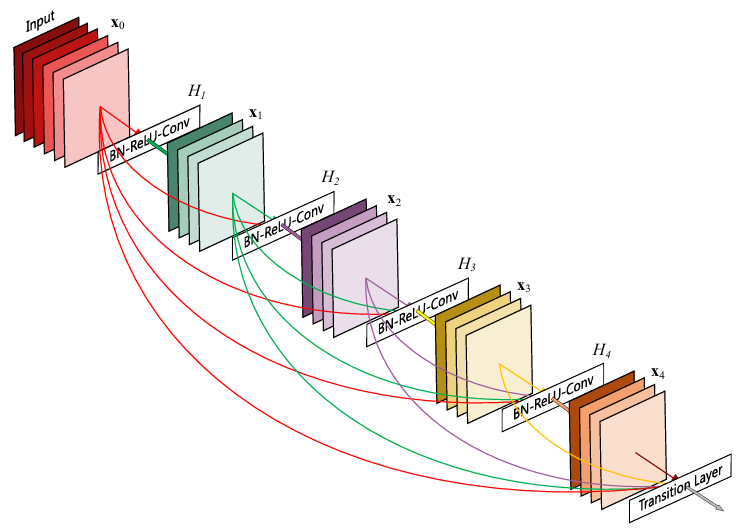
To understand CSPNet's innovation, we must first revisit DenseNet, a popular architecture known for its dense connectivity pattern where each layer receives feature maps from all preceding layers. While DenseNet minimizes the number of parameters and encourages feature reuse, it suffers from a critical issue: gradient information can become excessively duplicated across layers. This duplication leads to redundant computation and memory usage, ultimately limiting scalability and inference speed.
CSPNet Architecture Overview
CSPNet addresses DenseNet's inefficiencies by introducing a cross-stage partial connection. The core idea is to split the input feature map into two parts. One part goes through a dense block (or any block), while the other part is directly concatenated with the output of that block. This simple yet powerful modification yields two major benefits: improved gradient flow and reduced computation.
How Cross-Stage Partial Connections Work
In a standard dense block, all previous feature maps are concatenated before being processed. In CSPNet, the input is divided along the channel dimension into two equal halves: one half passes through the dense block, and the other half bypasses it entirely. After the dense block processes its half, the output is concatenated with the bypassed half. This creates a cross-stage connection that allows gradients to flow directly through the bypass path, avoiding the duplication observed in DenseNet.
Gradient Flow and Redundancy Reduction
The mathematical intuition behind CSPNet is grounded in gradient flow analysis. The paper demonstrates that in DenseNet, the same gradient information is repeatedly computed and stored because each layer's gradients depend on all previous layers. By splitting the input, CSPNet ensures that only half of the channels propagate through the dense block, while the other half serves as a direct gradient highway. This reduces the gradient duplication ratio and significantly cuts down on computational cost without sacrificing representational power.
Key Benefits: No Tradeoffs
CSPNet achieves multiple improvements simultaneously, famously summarized as "just better, no tradeoffs":
- Higher accuracy: The architectural change enables better gradient flow and feature reuse, often leading to improved top-1 and top-5 accuracy on benchmarks like ImageNet.
- Reduced computation: By halving the channels processed through dense blocks, CSPNet lowers FLOPs (floating-point operations) by approximately 20–30% compared to the baseline DenseNet.
- Faster inference: Fewer operations translate to lower latency, making CSPNet more suitable for real-time applications.
- Lower memory footprint: With less gradient duplication, memory usage during training is also reduced.
Implementing CSPNet from Scratch in PyTorch
Now let's walk through a from-scratch implementation of a basic CSPNet block using PyTorch. We'll focus on the cross-stage partial dense block, which is the core component.
Step 1: Define the Base Convolutional Layer
First, create a wrapper for a standard convolutional block with batch normalization and ReLU activation:
import torch
import torch.nn as nn

class ConvBlock(nn.Module):
    def __init__(self, in_channels, out_channels, kernel_size=3, stride=1, padding=1):
        super().__init__()
        self.conv = nn.Conv2d(in_channels, out_channels, kernel_size, stride, padding, bias=False)
        self.bn = nn.BatchNorm2d(out_channels)
        self.relu = nn.ReLU(inplace=True)

    def forward(self, x):
        return self.relu(self.bn(self.conv(x)))
Step 2: Create the CSPDenseBlock
The CSPDenseBlock splits the input, processes half through a series of dense layers, and then concatenates the result with the bypassed half:
class CSPDenseBlock(nn.Module):
    def __init__(self, in_channels, growth_rate, num_layers):
        super().__init__()
        self.hidden_channels = in_channels // 2
        # Split input along channel dimension
        self.dense_layers = nn.ModuleList()
        for _ in range(num_layers):
            layer = ConvBlock(self.hidden_channels + growth_rate * _, growth_rate)
            self.dense_layers.append(layer)

    def forward(self, x):
        # Split: first half goes through dense, second half bypasses
        x1, x2 = torch.chunk(x, 2, dim=1)
        dense_features = [x1]
        for layer in self.dense_layers:
            out = layer(torch.cat(dense_features, dim=1))
            dense_features.append(out)
        dense_out = torch.cat(dense_features, dim=1)
        # Concatenate with bypassed part
        out = torch.cat([dense_out, x2], dim=1)
        return out
Step 3: Integrate into a Complete Model
To build a full CSPNet, you can stack transition layers (convolution + pooling) between CSPDenseBlocks. The original paper uses the same structure as DenseNet but replaces dense blocks with CSP versions. A simple classifier can be added at the end.
Results and Comparisons
The paper reports extensive experiments on ImageNet and MS COCO. CSPNet consistently outperforms DenseNet and other architectures with similar FLOPs. For example, CSPNet-107 achieves 80.5% top-1 accuracy with 6.2 billion FLOPs, while DenseNet-121 achieves 75.0% with 5.7 billion FLOPs. The efficiency gain is even more pronounced in object detection tasks when used as a backbone.
Conclusion
CSPNet is a brilliant architectural innovation that demonstrates how a simple change in connectivity can break the performance-efficiency trade-off. By implementing cross-stage partial connections, we can build networks that are faster, lighter, and more accurate. The PyTorch code provided above offers a starting point for integrating CSPNet into your own projects. For further details, refer to the original paper.